Driving in New Jersey
Avoiding an accident is ALWAYS the best outcome.
Don’t just let someone hit you. You only have one body — protect it.
- Patience: Slow down, leave early, and avoid rushing. The goal is to arrive safely, not to set a personal speed record.
- Communication: Other drivers cannot guess your intentions. Use your signals, headlights, horn, and brake lights so they understand what you plan to do.
- Anticipation: Drive in a predictable manner. Sudden or unusual movements force other drivers to react quickly, increasing the likelihood of a collision.
- Visibility: If you can’t see another driver, they can’t see you. Maintain your lane, but position your vehicle so cross-traffic can see you, and so the car behind you can see the brake lights of the car in front of you.
- Traffic (look ahead): Watch far ahead and slow early to match the average speed of traffic. Smooth speed adjustments help prevent hard braking and “accordion” stop-and-go waves.
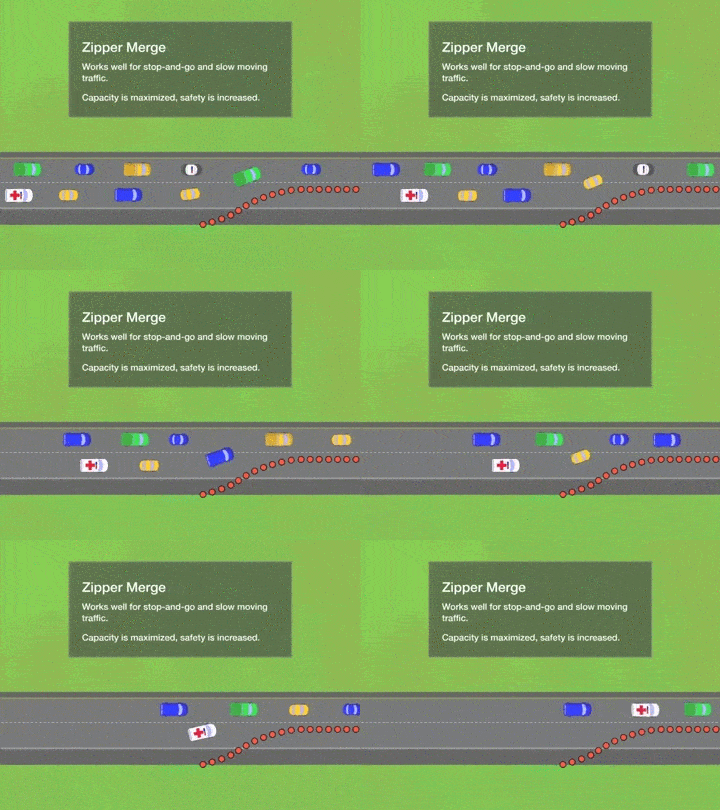
- Merging (the Zipper): When two lanes become one, merge like a zipper: one car from each lane. Use your signal early, hold your lane until the merge point, and leave a safe gap so the other lane can merge. Blocking the closing lane early or racing to “win” the merge creates braking, road rage, and crashes. Using both lanes fully and merging one-by-one at the lane closure shortens backups, reduces stop-and-go traffic, and lowers crash risk. Early merging may feel polite, but it increases congestion by leaving usable road space empty.
Tip: Your job is to be predictable. Pick a gap, match speed, signal, merge smoothly — then increase following distance again.
- On/Off-Ramp Merge (match traffic): Vehicles already on the highway have the right-of-way. The merging driver must adjust speed and spacing to fit into traffic — not expect traffic to brake or move over. Use the on-ramp to get up to the speed of highway traffic before you merge. Entering too slowly forces everyone behind you to brake and can cause dangerous lane changes. On exit ramps, don’t slam the brakes on the highway — signal, move to the exit lane, and slow down after you’re on the ramp (unless traffic or conditions require otherwise).
- Fuel Efficiency #physics: Objects in motion want to stay in motion. Starting from a full stop costs fuel because you must add energy (from your fuel) to overcome the resistance of inertia, friction, and air. Then you often waste that energy as heat in the brakes when you slam on them. Smooth driving saves fuel.
Fuel-saving techniques: (1) Accelerate gently, but not too slowly, (2) manage following distance so you can coast instead of brake, (3) maintain a steady speed (use cruise control, it's GRRREAT!), (4) anticipate lights and ramps early, (5) avoid aggressive speeding—rushing burns fuel and saves an insignificant amount of time since you're just going to the next red light.
- KEEP RIGHT Pass Left (NJ Law): Slow drivers in the left lane force others to pass on the right, which increases conflict and creates unnecessary braking. Keep right except to pass, then move back over.
- Large Vehicles: Trucks and buses require much more distance to stop. Never cut into their safety zone, and always give them extra space to maneuver.